Introduction
Have you ever noticed that the first bite of your favorite food feels incredibly satisfying—but each bite after that feels slightly less exciting?
Whether it’s your favorite street food, a home-cooked meal, or dessert, that first bite often delivers the strongest flavor and enjoyment. This isn’t just your imagination—it’s rooted in biology, psychology, and brain chemistry.
The phenomenon is closely linked to Sensory adaptation, where your senses become less responsive over time.
Let’s explore the fascinating science behind why the first bite always tastes the best.
The Science Behind Taste and Enjoyment
Taste is not just about your tongue—it’s a combination of:
- Taste buds
- Smell
- Texture
- Temperature
- Brain processing
When you take the first bite, all these systems are fully activated and highly sensitive.
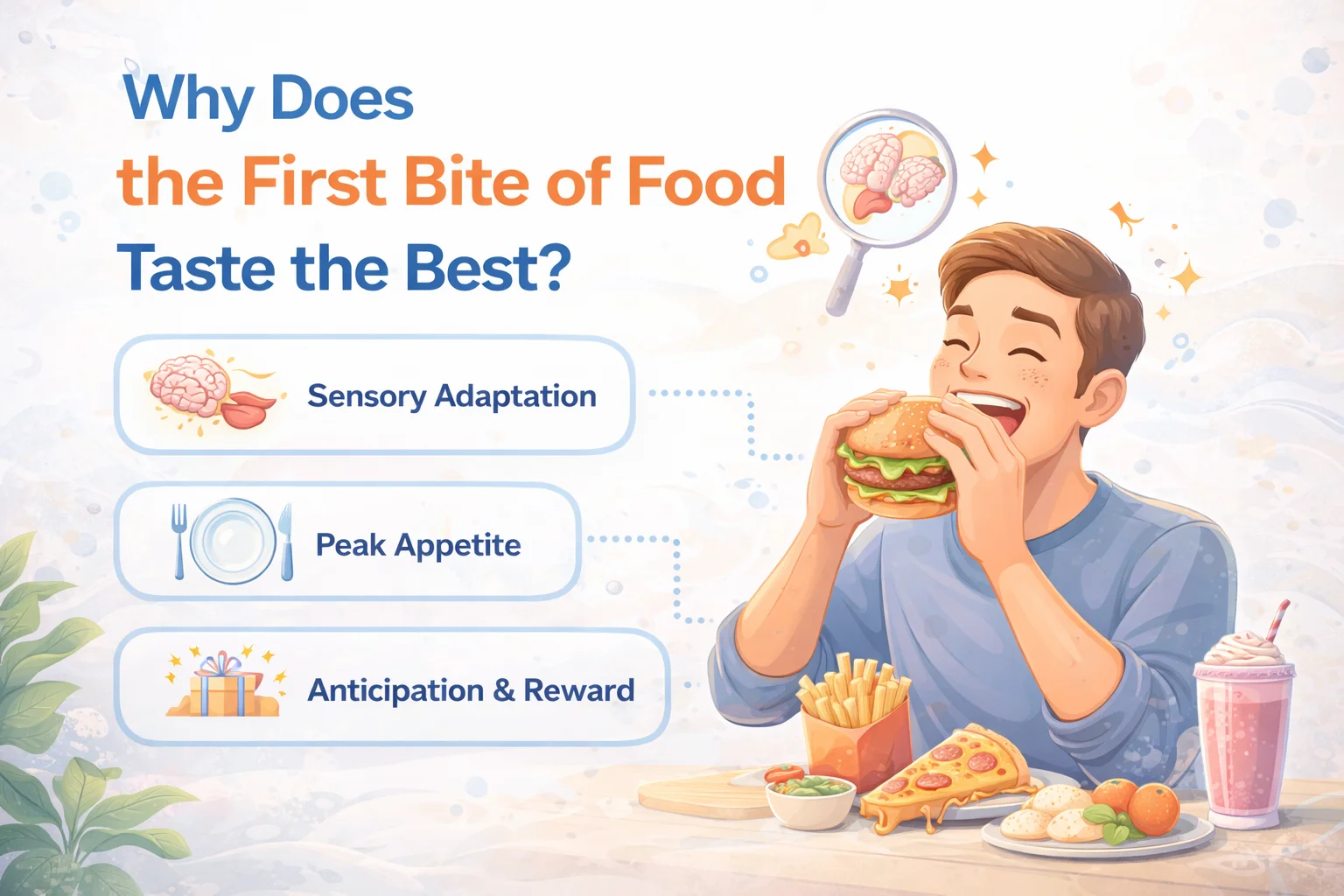
1. Sensory Adaptation: The Main Reason
Your body is designed to respond strongly to new experiences—but quickly adapt to them.
Sensory adaptation means:
- First bite = strong signal to brain
- Repeated bites = reduced response
- Flavor feels less intense over time
This is why even your favorite food becomes “normal” after a few bites.
2. Hunger Makes Food Taste Better
When you’re hungry:
- Your senses become sharper
- Your brain is more focused on food
- Taste feels more intense
This is linked to Ghrelin, which increases before meals and enhances food appeal.
3. Dopamine Release (The Reward System)
The first bite triggers a surge of pleasure in your brain.
- Brain releases dopamine
- You feel satisfaction and excitement
- Anticipation turns into reward
This is part of the Dopamine reward system.
After the first bite, dopamine levels gradually decrease, reducing excitement.
4. Contrast Effect: From Expectation to Reality
Before eating, your brain builds anticipation:
- Smell of food
- Visual appeal
- Hunger level
The first bite delivers a contrast between expectation and reality—making it feel more rewarding.
5. Taste Bud Sensitivity Is Highest at First Bite
Your taste buds are most sensitive before eating.
- First exposure = strongest signal
- Repeated exposure = reduced sensitivity
This is why flavors seem less intense as you continue eating.
6. Smell Plays a Big Role
Up to 80% of taste comes from smell.
- First bite activates your sense of smell strongly
- Nose becomes less sensitive over time
This reduces flavor intensity in later bites.
7. Psychological Satisfaction
The first bite often feels special because:
- You’ve been waiting for it
- It marks the start of eating
- It satisfies anticipation
Your brain values “first experiences” more than repeated ones.
8. Oral Fatigue
As you continue eating:
- Mouth muscles get used to the texture
- Flavor becomes predictable
- Excitement decreases
This is called oral sensory fatigue.
9. Variety Keeps Taste Exciting
This is why buffets feel enjoyable.
Different foods prevent sensory adaptation.
- New flavors reset your taste experience
- Each new dish feels like a “first bite”
Related: Plant-Based Diet Meal Plans for Beginners
Why This Happens More with Favorite Foods
You feel this effect more strongly with foods you love because:
- Higher anticipation
- Stronger dopamine release
- Greater emotional connection
How to Make Food Taste Better for Longer
1. Eat Slowly
Gives your brain time to enjoy each bite.
2. Take Small Breaks
Allows your senses to reset slightly.
3. Mix Different Foods
Prevents sensory adaptation.
4. Focus on Eating (Mindful Eating)
Avoid distractions like phones or TV.
5. Control Portion Size
Smaller portions maintain excitement.
Interesting Real-Life Examples
- First sip of tea in the morning feels amazing
- First bite of pizza tastes best
- Dessert feels less exciting after a heavy meal
FAQs
1. Why does the first bite taste the best?
Due to sensory adaptation, dopamine release, and hunger.
2. Is this a psychological or physical effect?
Both—brain chemistry and sensory response are involved.
3. Can I make every bite taste like the first?
Not exactly, but variety and mindful eating help.
4. Why do I lose interest in food while eating?
Because your brain adapts and reduces response to repeated flavors.
5. Does hunger affect taste?
Yes, hunger increases taste sensitivity.
Conclusion
The reason the first bite tastes the best is a combination of biology, brain chemistry, and psychology. Your senses are most sensitive at the start, your brain releases pleasure chemicals, and anticipation reaches its peak.
As you continue eating, your body adapts, reducing the intensity of taste and excitement.
Understanding this can help you enjoy food more mindfully—and appreciate that magical first bite even more.