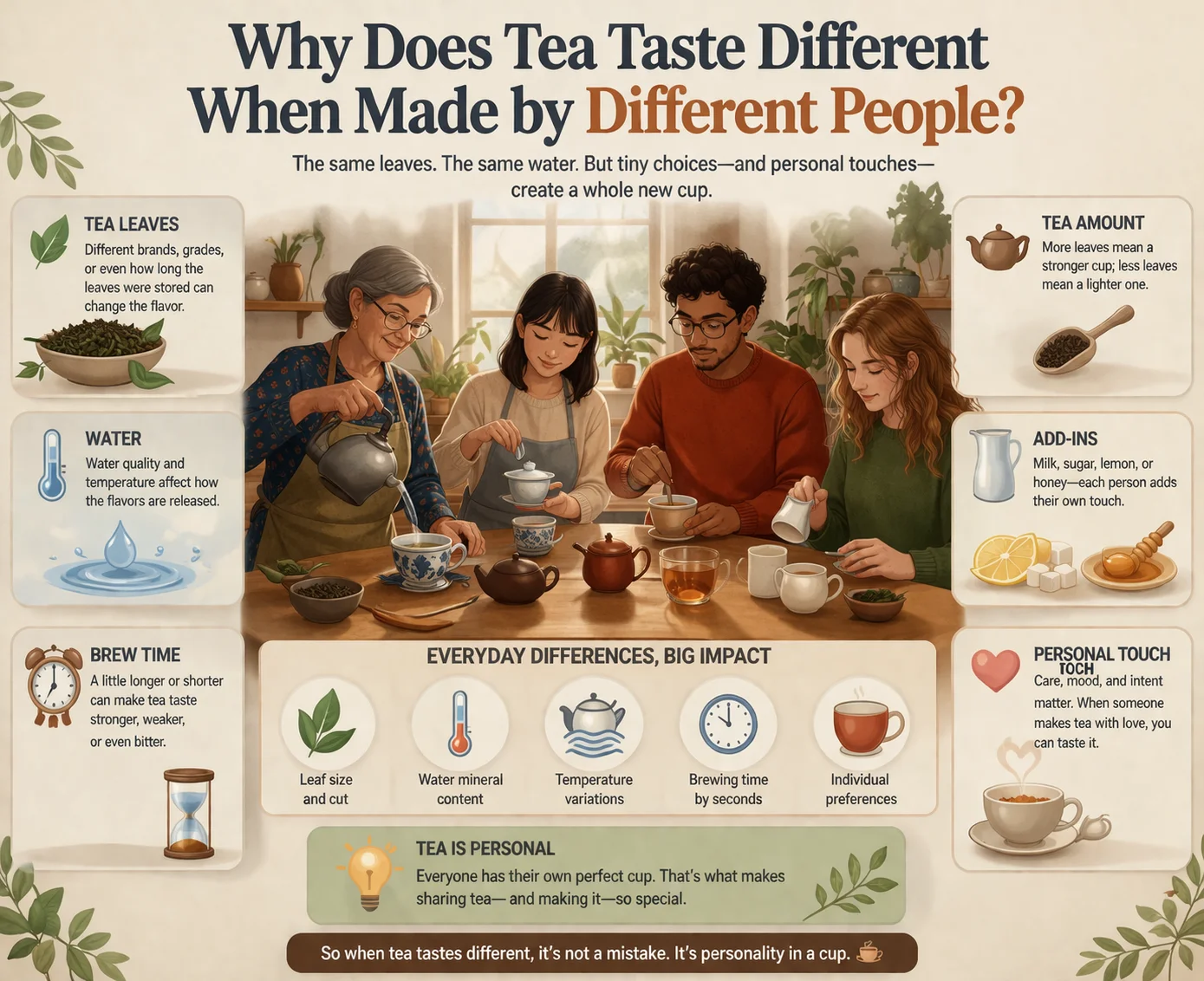
Have you ever noticed that the same tea leaves can taste completely different depending on who makes it? Even when using the same ingredients, the flavor, aroma, and strength can vary a lot.
This happens because making tea is not just a simple process—it’s influenced by small details, personal habits, and techniques. Let’s explore why tea tastes different when made by different people.
1. Water Quality Matters
The type of water used plays a huge role in how tea tastes. Some people use filtered water, while others use tap water.
Differences in:
- Minerals
- Purity
- Hardness
can change the flavor of the tea significantly. Clean, balanced water usually produces a better taste.
2. Tea-to-Water Ratio
Not everyone uses the same amount of tea leaves or tea powder. Some prefer strong tea, while others like it light.
Even a small change in quantity can affect:
- Strength
- Bitterness
- Overall flavor
This is one of the main reasons why tea tastes different from person to person.
3. Brewing Time
How long the tea is brewed also makes a big difference.
- Short brewing = lighter taste
- Long brewing = stronger and sometimes bitter taste
Each person has their own timing, which directly affects the final result.
4. Temperature of Water
The temperature of the water is another key factor. Some people boil water fully, while others use slightly cooler water.
Different temperatures extract flavors differently, especially for green tea, black tea, or herbal tea.
5. Order of Ingredients
Believe it or not, the order in which ingredients are added can change the taste.
For example:
- Adding milk before or after boiling
- When sugar is added
- When tea leaves are introduced
These small variations can subtly alter the flavor and texture.
6. Personal Style and Experience
Making tea is often a habit developed over time. Experienced tea makers adjust things instinctively—like flame level, timing, or stirring.
These personal touches create a unique flavor that’s hard to replicate exactly.
7. Type and Freshness of Ingredients
Even if two people use the “same” tea, the freshness of the tea leaves, milk quality, or type of sugar can differ.
Fresh ingredients usually result in a richer and more pleasant taste.
8. Utensils Used
The type of pot or kettle used can also influence taste.
For example:
- Steel, clay, or aluminum utensils
- Thickness of the pot
- Heat distribution
All these factors can slightly affect how the tea is brewed.
9. Flame and Cooking Method
The intensity of heat matters. Some people cook tea on a high flame, while others prefer a slow simmer.
Slow cooking can enhance flavor, while fast boiling may make it sharper or harsher.
10. Emotional and Psychological Factors
Interestingly, your perception of taste can also be influenced by emotions.
Tea made by someone you trust or care about—like a family member—often feels more satisfying. This is not just about taste, but also about comfort and emotional connection.
Plant-Based Diet Meal Plans for Beginners
Why “Mom’s Tea” or “Street Tea” Tastes Special
Many people say that tea made by their mother or a local tea vendor tastes better. This is often because:
- They have perfected their method over time
- They maintain consistency
- There is an emotional or nostalgic connection
It’s a mix of skill and feeling.
Conclusion
Tea tastes different when made by different people because of small variations in technique, ingredients, and personal habits. From water quality to brewing time and even emotions, every detail plays a role.
In the end, making tea is not just a process—it’s an art shaped by individual style. That’s what makes every cup unique.
FAQs
1. Why does my tea taste different every time?
Small changes in water, timing, or ingredients can affect the taste.
2. Does water really affect tea flavor?
Yes, water quality has a major impact on taste and aroma.
3. Why is tea better when someone else makes it?
It may be due to their technique, experience, or your emotional connection.
4. Can I make my tea taste consistent?
Yes, by using the same measurements, timing, and method each time.
5. Does the type of tea matter?
Yes, different types of tea require different brewing methods for the best flavor.