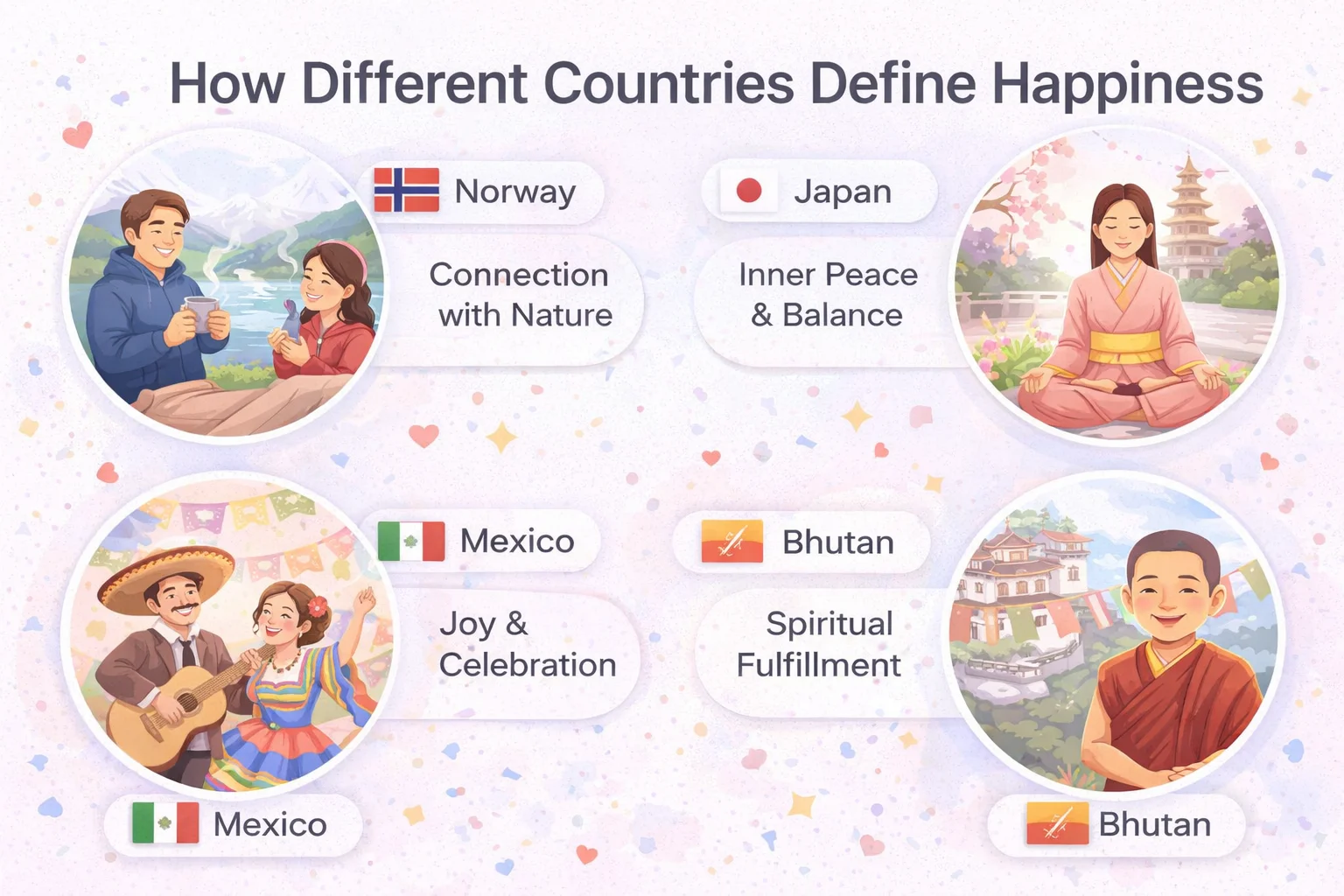
Happiness is something everyone seeks, yet its meaning can vary greatly depending on where you live. While some people associate happiness with wealth and success, others find it in relationships, simplicity, or inner peace. Across the world, cultures shape how happiness is understood and experienced.
Let’s explore how different countries define happiness and what makes people feel truly fulfilled in different parts of the world.
1. Denmark – Happiness Through Balance and Security
Denmark is often ranked among the happiest countries in the world. Here, happiness is closely linked to balance, equality, and social security.
The concept of “hygge” plays a big role in Danish life. It refers to enjoying simple pleasures like spending time with loved ones, cozy environments, and feeling safe and comfortable. Rather than chasing luxury, people in Denmark focus on contentment and well-being.
2. Japan – Happiness in Purpose and Harmony
In Japan, happiness is often connected to purpose and harmony. The idea of “ikigai”—a reason for being—guides many people’s lives.
Instead of focusing only on pleasure, people in Japan find happiness in meaningful work, discipline, and contributing to society. Social harmony and respect for others are also key elements of well-being.
3. United States – Happiness as Freedom and Achievement
In the United States, happiness is often associated with personal freedom, success, and achievement. The idea of the “American Dream” reflects the belief that anyone can achieve happiness through hard work and determination.
Individual goals, career success, and financial independence are commonly seen as important factors contributing to happiness.
4. India – Happiness in Relationships and Spirituality
In India, happiness is deeply rooted in relationships, family bonds, and spirituality. Strong social connections and community support play a major role in people’s lives.
Many people also find happiness through spiritual practices, traditions, and a sense of inner peace rather than material success alone.
5. Brazil – Happiness in Joy and Social Life
Brazil is known for its vibrant culture and joyful lifestyle. Happiness here is often expressed through social interactions, celebrations, and a positive outlook on life.
Music, festivals, and spending time with friends and family are central to how people experience happiness.
6. Bhutan – Happiness as a National Priority
Bhutan takes a unique approach by measuring happiness through Gross National Happiness (GNH) instead of just economic growth.
The country focuses on well-being, environmental conservation, cultural values, and good governance. Happiness is seen as a balance between material and spiritual development.
7. Germany – Happiness in Stability and Structure
In Germany, happiness is often linked to stability, order, and security. People value efficiency, planning, and a structured lifestyle.
Having a stable job, financial security, and a well-organized life contributes significantly to overall satisfaction.
8. Australia – Happiness in Lifestyle and Nature
Australia emphasizes a relaxed lifestyle and connection with nature. Outdoor activities, work-life balance, and a friendly social environment are key to happiness.
People value free time, travel, and enjoying life rather than focusing only on work.
9. France – Happiness in Pleasure and Quality of Life
In France, happiness is often associated with enjoying life’s pleasures—good food, art, culture, and leisure.
The focus is on quality over quantity, whether it’s meals, work, or experiences. Taking time to enjoy life is considered essential.
10. South Korea – Happiness Through Success and Effort
In South Korea, happiness is often tied to achievement, education, and hard work. Success in career and academics plays a significant role.
However, there is also a growing awareness of balancing work with mental well-being and personal life.
What Can We Learn from These Perspectives?
Different countries show that happiness is not one-size-fits-all. It can come from:
- Strong relationships
- Personal success
- Inner peace
- Social harmony
- Enjoying simple moments
Understanding these global perspectives can help us redefine our own idea of happiness and focus on what truly matters.
Conclusion
Happiness means different things in different cultures, shaped by values, traditions, and lifestyles. While some countries focus on success and independence, others prioritize community, balance, or spirituality.
By learning from these diverse perspectives, we can create a more balanced and meaningful approach to happiness in our own lives.
FAQs
1. Do all countries define happiness the same way?
No, each country has its own cultural values that shape how happiness is understood and experienced.
2. What is the happiest country in the world?
Countries like Denmark and other Nordic nations often rank high in global happiness reports.
3. What is Gross National Happiness?
It is a measure used by Bhutan that focuses on well-being rather than just economic growth.
4. Is money the main factor for happiness?
Money can contribute to comfort, but relationships, health, and purpose are also important factors.
5. Can we learn happiness from other cultures?
Yes, exploring global perspectives can help us adopt habits and values that improve our own well-being.