A sore throat, medically known as pharyngitis, is a common health problem that causes pain, irritation, or scratchiness in the throat. It often becomes worse when swallowing food or drinks. Most people experience a sore throat at least once a year, especially during seasonal changes, viral infections, or cold weather.
In many cases, sore throat is not serious and goes away within a few days. However, understanding its causes, symptoms, and treatment can help you recover faster and prevent complications.
What is Sore Throat (Pharyngitis)?
Pharyngitis refers to inflammation of the pharynx, the back part of the throat located behind the nose and mouth. When this area becomes inflamed due to infection or irritation, it results in pain and discomfort.
Sore throat is often associated with illnesses such as the common cold, flu, or throat infections. It can affect people of all ages but is more common in children and individuals with weak immunity.
Common Causes of Sore Throat
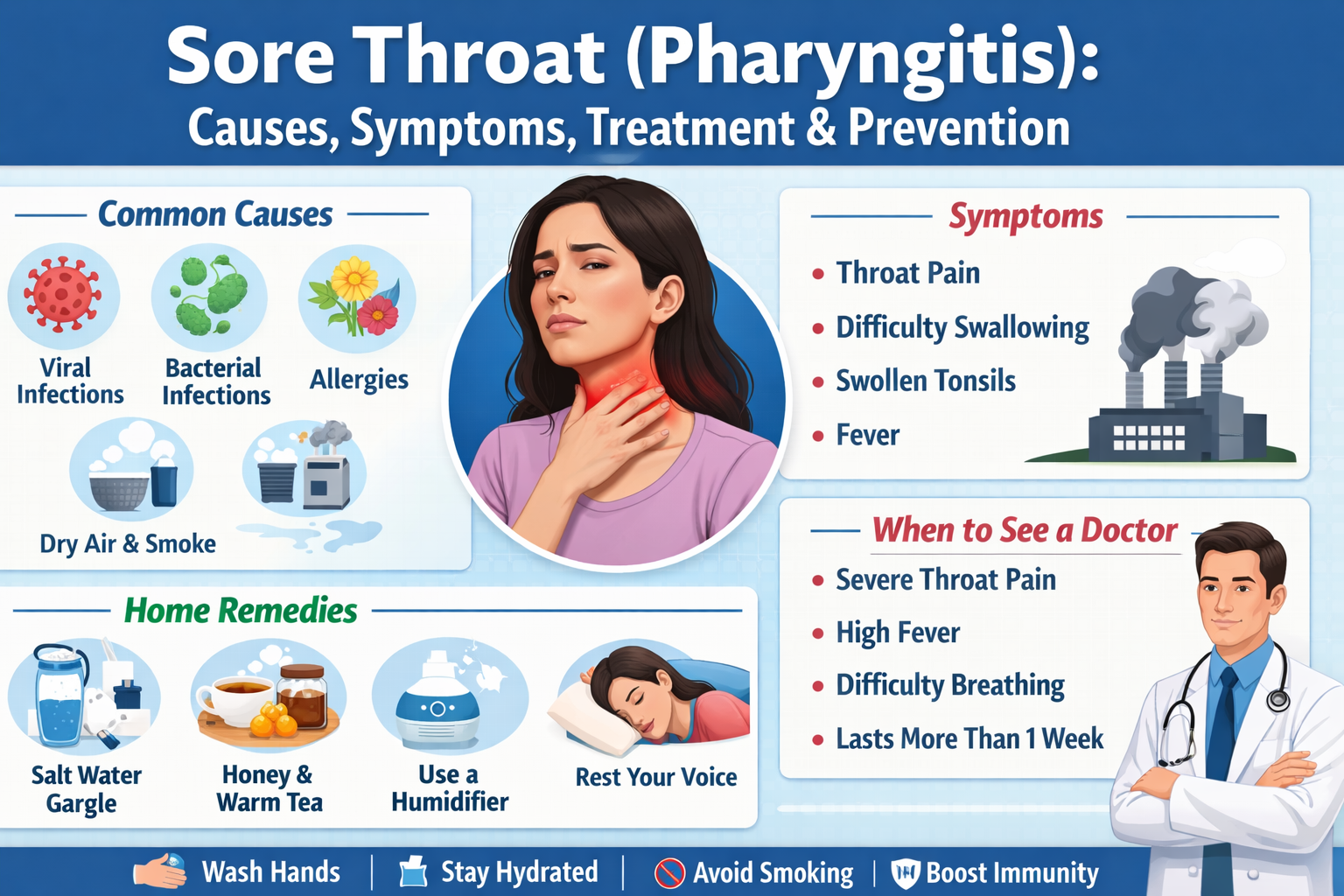
There are several reasons why a person may develop a sore throat. The most common causes include:
1. Viral Infections
Most sore throats are caused by viruses. Viral infections include:
- Common cold
- Influenza (flu)
- COVID-19
- Mononucleosis
These infections usually resolve on their own and do not require antibiotics.
2. Bacterial Infections
Some sore throats occur due to bacteria such as Streptococcus, which causes strep throat. Bacterial infections are less common but may require antibiotic treatment prescribed by a doctor.
3. Allergies
Allergic reactions to dust, pollen, mold, or pet dander can cause throat irritation and inflammation.
4. Dry Air
Dry air, especially during winter, can make the throat dry and scratchy, leading to discomfort.
5. Pollution and Smoke
Exposure to cigarette smoke, vehicle pollution, or chemical fumes can irritate the throat.
6. Excessive Voice Use
Talking loudly, shouting, or singing for long periods may strain the throat muscles and cause soreness.
7. Acid Reflux
Acid reflux occurs when stomach acid flows back into the throat, causing irritation and pain.
Symptoms of Sore Throat
Symptoms of pharyngitis can vary depending on the underlying cause. Common symptoms include:
- Pain or irritation in the throat
- Difficulty swallowing
- Dry or scratchy throat
- Swollen glands in the neck
- Red or swollen tonsils
- Hoarseness or voice changes
- Fever in some cases
If the sore throat is caused by viral infections like cold or flu, additional symptoms may include:
- Runny nose
- Sneezing
- Cough
- Body aches
- Headache
When to See a Doctor
Most sore throats improve within 3 to 7 days. However, you should consult a doctor if you experience:
- Severe throat pain
- Difficulty breathing or swallowing
- High fever
- Rash on the body
- Blood in saliva or phlegm
- Symptoms lasting more than one week
These symptoms may indicate a more serious infection that requires medical attention.
What Should We Do When Blood Sugar Is High? A Simple Guide for Everyone
Home Remedies for Sore Throat
Several simple home remedies can help relieve throat pain and speed up recovery.
1. Warm Salt Water Gargle
Gargling with warm salt water can reduce swelling and kill bacteria in the throat.
2. Honey and Warm Water
Honey has natural antibacterial properties and can soothe throat irritation.
3. Drink Plenty of Fluids
Warm drinks such as herbal tea, soup, or warm water help keep the throat moist.
4. Rest Your Voice
Avoid shouting or excessive talking to allow your throat to heal.
5. Use a Humidifier
A humidifier adds moisture to the air and prevents throat dryness.
6. Ginger or Turmeric Milk
These natural ingredients have anti-inflammatory properties and can help reduce throat pain.
Medical Treatment for Sore Throat
Treatment depends on the cause of the sore throat.
Viral Infections
If the infection is viral, doctors usually recommend:
- Rest
- Pain relievers
- Warm fluids
Antibiotics are not effective against viruses.
Bacterial Infections
If the sore throat is caused by bacteria such as strep throat, doctors may prescribe antibiotics to treat the infection.
Pain Relief
Over-the-counter medications can help reduce pain, fever, and inflammation.
How to Prevent Sore Throat
Although sore throat is common, you can reduce the risk by following simple preventive measures.
- Wash your hands frequently
- Avoid close contact with sick people
- Drink enough water daily
- Avoid smoking and second-hand smoke
- Maintain good immunity through a healthy diet
- Cover your mouth while coughing or sneezing
Maintaining a strong immune system with proper nutrition, exercise, and sleep can also help prevent infections that cause sore throat.
Complications of Untreated Sore Throat
Most sore throats are mild, but untreated bacterial infections can sometimes lead to complications such as:
- Tonsillitis
- Ear infections
- Sinus infections
- Rheumatic fever (in rare cases)
Therefore, proper diagnosis and treatment are important if symptoms become severe or persistent.
Conclusion
Sore throat (pharyngitis) is a common condition that can cause pain and discomfort while swallowing. It is usually caused by viral infections, but bacteria, allergies, pollution, or dry air can also trigger the problem.
Most cases improve within a few days with simple home remedies such as warm salt water gargles, hydration, and rest. However, if symptoms persist or become severe, medical advice should be taken.
By maintaining good hygiene, strengthening immunity, and avoiding irritants, you can reduce the chances of developing sore throat and stay healthy throughout the year.
FAQs About Sore Throat (Pharyngitis)
1. What is the fastest way to cure a sore throat?
Drinking warm fluids, gargling with salt water, using honey, and resting your voice are some of the fastest ways to relieve sore throat symptoms.
2. How long does a sore throat last?
Most sore throats last 3 to 7 days, depending on the cause and treatment.
3. Is sore throat contagious?
Yes, if the sore throat is caused by viral or bacterial infections, it can spread from one person to another through coughs, sneezes, or close contact.
4. Can cold weather cause sore throat?
Cold weather itself does not cause sore throat, but it can increase the risk of viral infections and dry air that irritates the throat.
5. When should I worry about a sore throat?
You should seek medical help if the sore throat lasts more than a week, causes difficulty breathing or swallowing, or is accompanied by high fever.