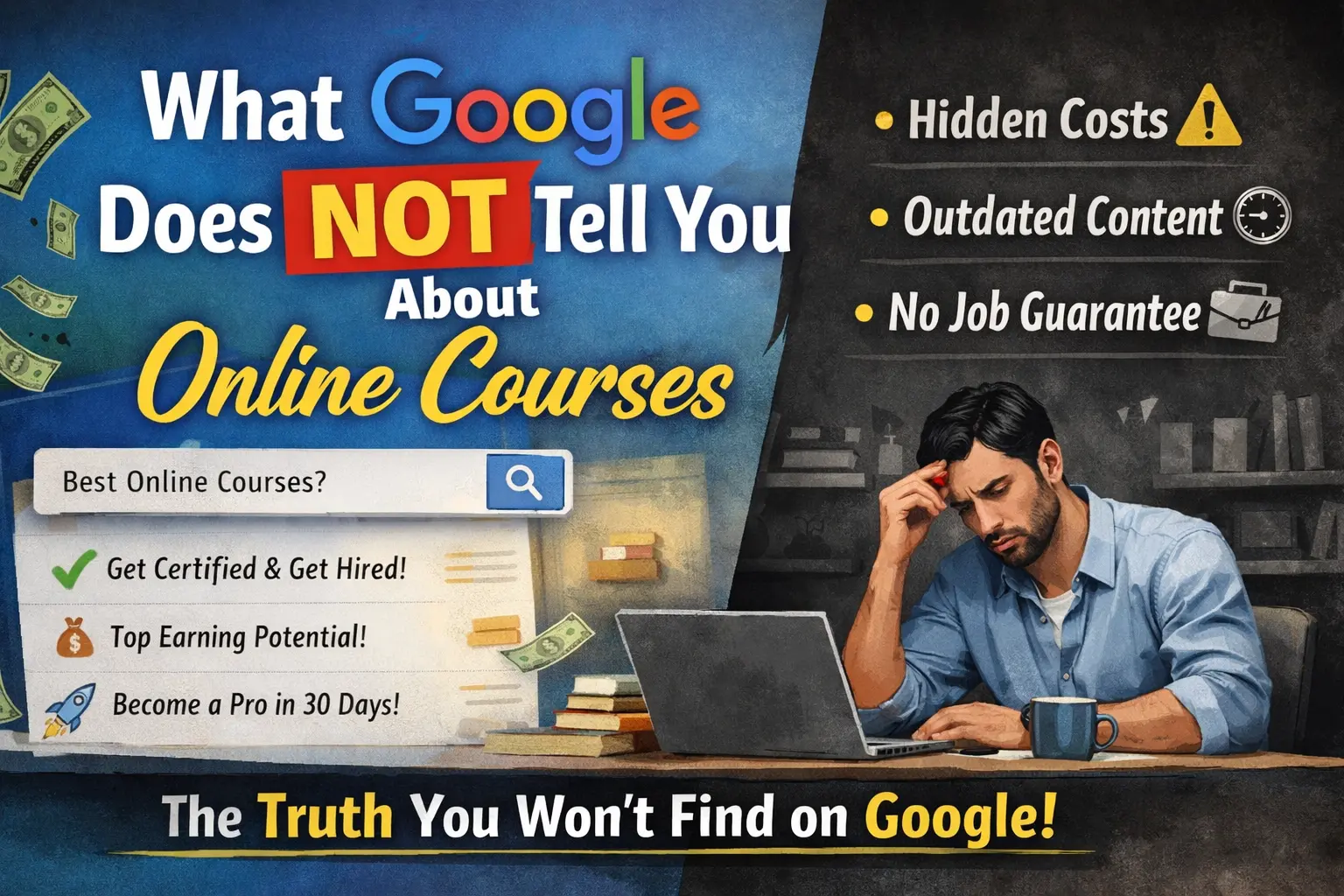
Online courses are everywhere today. Search for “best online course,” “learn skills online,” or “online certification,” and Google instantly shows millions of results. You see ads from big platforms, glowing reviews, success stories, and headlines promising high salaries after completing a course.
But here’s the truth: Google does not tell you the full story about online courses.
While online learning can be powerful and life-changing, it also has hidden realities that most people discover only after spending money, time, and energy. In this article, we’ll uncover what search results, ads, and sponsored blogs don’t openly explain—so you can make smarter decisions.
This is not to scare you away from online courses, but to help you understand what really works, what doesn’t, and what you must check before enrolling.
Why Online Courses Look Perfect on Google
When you search for online courses, the top results usually show:
- “Best online courses to get a job”
- “Top certifications with high salary”
- “Learn XYZ skill in 30 days”
- “No degree required, earn ₹10 LPA”
These pages rank high because they are:
- SEO-optimized
- Often sponsored or affiliate-based
- Written to convert clicks into sales
What Google shows you is what ranks best, not necessarily what’s best for you.
The Hidden Truth About “Best Online Courses”
1. “Best” Is Often Paid, Not Proven
Many articles ranking “top online courses” earn commission when you enroll. That means:
- The platform pays the blogger
- The blogger promotes the course
- You trust the ranking
This doesn’t mean the course is bad—but it does mean the ranking is not neutral.
What Google doesn’t tell you:
A course can rank #1 online and still be outdated, poorly taught, or unsuitable for beginners.
2. Certificates Don’t Guarantee Jobs
One of the biggest myths online courses create is:
“Complete this course and get hired.”
Reality check:
- Employers value skills, not certificates
- Many recruiters ignore certificates without projects
- Entry-level jobs still require practical experience
Certificates help only when combined with:
- Real projects
- Internships
- Freelancing or hands-on practice
What Google doesn’t show:
Thousands of people hold the same certificate as you.
The Skill Gap No One Talks About
3. Courses Teach Theory, Not Real-World Problems
Most online courses focus on:
- Concepts
- Tools
- Step-by-step tutorials
But real jobs require:
- Problem-solving
- Decision-making
- Handling errors
- Working under pressure
Example:
A digital marketing course may teach ads, but not how to handle a client who is losing money.
What Google doesn’t tell you:
You’ll need extra learning beyond the course to be job-ready.
4. Outdated Content Still Ranks High
Search results often show old courses because:
- They have backlinks
- They’ve ranked for years
- Platforms don’t remove outdated content
So you might end up learning:
- Old tools
- Irrelevant techniques
- Practices no longer used
Tip: Always check:
- Last updated date
- Recent reviews
- Course version
The Motivation Trap of Online Learning
5. 90% of Learners Never Finish Courses
This statistic is rarely highlighted.
Why people quit:
- No discipline
- No accountability
- Life distractions
- Course feels boring or difficult
Online courses demand self-motivation, not just interest.
What Google hides:
Completion rates matter more than enrollment numbers.
6. Learning Alone Is Harder Than It Looks
Offline learning gives you:
- Peer pressure
- Teacher interaction
- Fixed schedules
Online courses often mean:
- Watching videos alone
- No real feedback
- Delayed doubt resolution
Many learners lose confidence midway.
The Pricing Illusion
7. Discounts Are Often Fake
“₹10,000 course now only ₹499!”
In reality:
- The course was never sold at ₹10,000
- Discounts run all year
- Prices are psychological triggers
What Google doesn’t tell you:
Price ≠ value.
8. Free Courses Are Not Always Useless (and Paid Ones Are Not Always Better)
Free courses:
- Can teach basics well
- Are good for exploration
- Often created by experts
Paid courses:
- Are sometimes repackaged free content
- Don’t always offer better teaching
- May lack support
The real difference is structure and commitment, not price.
Instructor Reality: Another Hidden Side
9. Not All Instructors Are Industry Experts
Some instructors:
- Have never worked in real jobs
- Teach copied material
- Focus more on selling than teaching
Check:
- Instructor background
- LinkedIn profile
- Real-world experience
What Google doesn’t show clearly:
Anyone can become an online course instructor.
10. Teaching Skill Matters More Than Knowledge
Being good at a skill does not mean being good at teaching it.
Poor teaching leads to:
- Confusion
- Frustration
- Dropouts
The Platform Bias You Should Know
11. Big Platforms Get Priority Visibility
Search engines favor:
- High-authority platforms
- Big brands
- High ad spenders
Smaller but better courses:
- Get buried
- Don’t rank
- Stay invisible
So Google results are not a complete list of quality options.
Language & Accessibility Issues
12. Most Courses Are Not Beginner-Friendly
Many courses assume:
- Prior knowledge
- English fluency
- Tech familiarity
This creates a gap for:
- Non-English speakers
- First-time learners
- Students from non-tech backgrounds
What Google doesn’t mention:
Difficulty level is subjective.
Career Reality After Online Courses
13. Courses Don’t Teach Networking
Jobs often come from:
- Referrals
- Communities
- Networking
Online courses rarely teach:
- How to talk to recruiters
- How to build professional networks
- How to negotiate salaries
14. Portfolio Matters More Than Completion
Employers ask:
- “What have you built?”
Not: - “Which course did you complete?”
Your focus should be:
- Projects
- Case studies
- Practical output
How to Use Online Courses the Right Way
Here’s what Google won’t guide you step-by-step, but you should follow:
- Use courses as tools, not guarantees
- Start with free content before paying
- Choose project-based learning
- Practice daily, not occasionally
- Combine learning with real work
- Join communities for support
- Track skill improvement, not certificates
Are Online Courses Worth It?
Yes—but only if you understand their limits.
Online courses are:
- Great for learning skills
- Useful for career switching
- Helpful for self-paced learners
They are NOT:
- Instant job tickets
- Replacements for experience
- Magic solutions
Final Thoughts
Google shows you what ranks, not what prepares you.
Online courses can change your life only when paired with discipline, practice, and realistic expectations. The more aware you are of what’s hidden behind search results, the better choices you’ll make.
Learn smart, not just fast.
FAQs: What Google Does Not Tell You About Online Courses
Q1. Are online course certificates valuable?
Certificates add value only when supported by real skills and projects.
Q2. Why do some bad courses rank high on Google?
Because of SEO, ads, backlinks, and affiliate marketing—not always quality.
Q3. Should I choose paid or free online courses?
Start with free courses, then invest in paid ones only if they add structure and mentorship.
Q4. How can I tell if an online course is good?
Check recent reviews, project work, instructor background, and update frequency.
Q5. Can online courses help in career change?
Yes, but only when combined with hands-on practice, networking, and patient.