High blood sugar, also called hyperglycemia, happens when there is too much glucose (sugar) in your blood. It is common in people with diabetes, but it can also happen to anyone during stress, illness, or unhealthy eating habits.
If high blood sugar is not controlled, it can cause serious health problems over time. The good news is that you can manage it with the right steps, healthy habits, and medical care.
In this complete guide, we will explain:
- What high blood sugar is
- Symptoms to watch for
- Immediate steps to take
- Long-term lifestyle changes
- When to see a doctor
- Foods to eat and avoid
- Simple daily routine for better control
Let’s understand everything in simple language.
What Is High Blood Sugar?
Blood sugar is the amount of glucose in your blood. Your body uses glucose for energy. The hormone insulin helps move glucose from the blood into the cells.
When your body:
- Does not make enough insulin, or
- Cannot use insulin properly
Sugar builds up in the blood. This is called high blood sugar.
Normal fasting blood sugar: 70–99 mg/dL
Prediabetes: 100–125 mg/dL
Diabetes: 126 mg/dL or higher
After meals, blood sugar above 180 mg/dL is considered high.
Common Symptoms of High Blood Sugar
High blood sugar may not always show symptoms immediately. But common signs include:
- Feeling very thirsty
- Frequent urination
- Feeling tired
- Blurred vision
- Headache
- Dry mouth
- Slow healing wounds
- Increased hunger
If blood sugar becomes very high, it can cause:
- Nausea
- Vomiting
- Shortness of breath
- Fruity-smelling breath
- Confusion
This can be dangerous and needs urgent medical help.
What Should You Do Immediately When Blood Sugar Is High?
If you check your sugar level and it is high, don’t panic. Follow these steps:
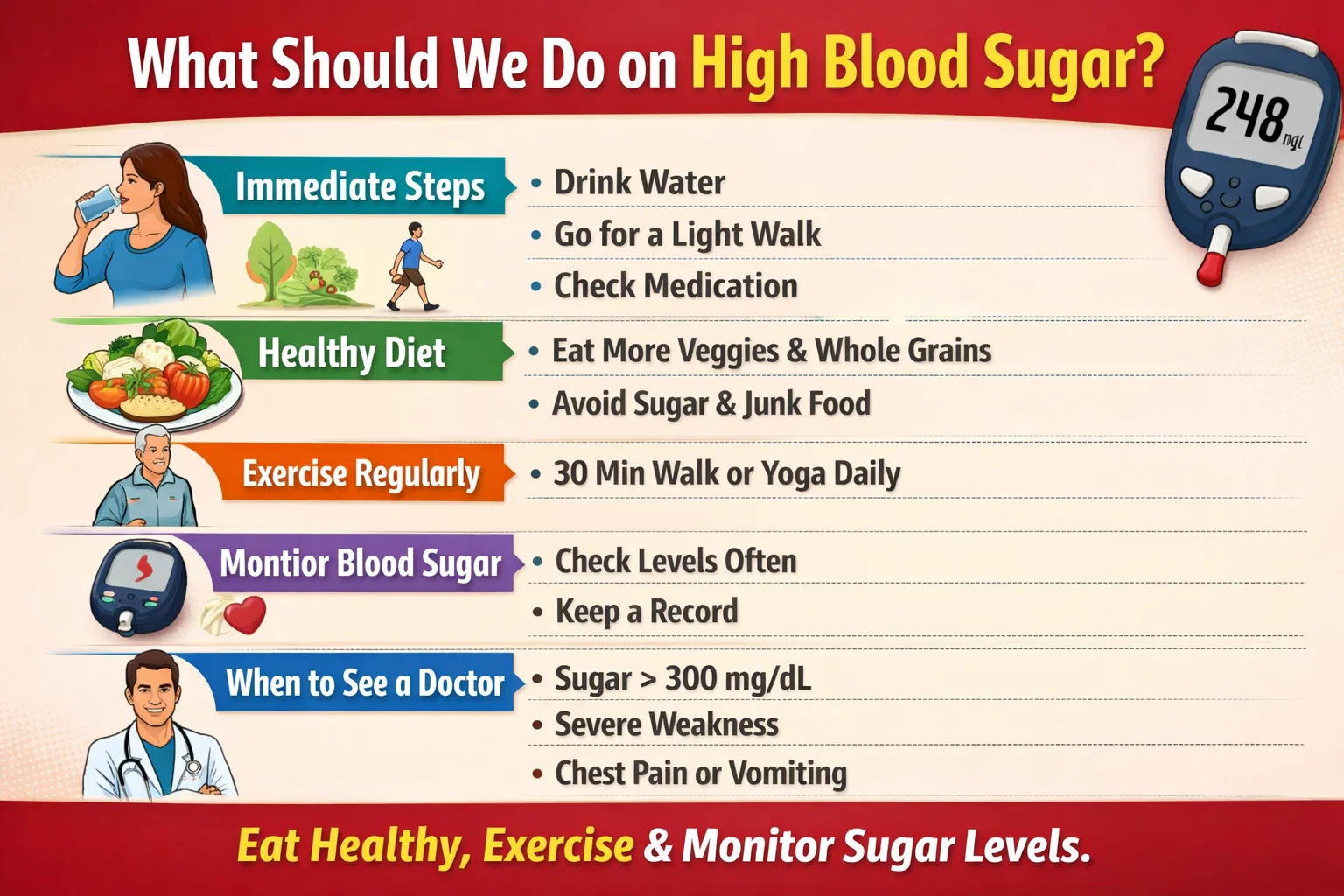
1. Drink Water
Water helps remove excess sugar through urine. Drink 1–2 glasses of water immediately.
Avoid:
- Sugary drinks
- Fruit juices
- Soft drinks
Only drink plain water.
2. Go for a Light Walk
Light physical activity helps your body use extra sugar for energy.
- Walk for 15–20 minutes
- Do gentle stretching
But do not exercise if:
- Blood sugar is above 300 mg/dL
- You feel weak or dizzy
3. Check Your Medication
If you have diabetes:
- Did you miss your insulin or medicine?
- Did you take the correct dose?
If not, follow your doctor’s instructions.
Never increase insulin dose without medical advice unless your doctor has given correction guidelines.
4. Check for Ketones (If You Have Type 1 Diabetes)
If sugar is above 250 mg/dL, test for ketones using urine strips.
High ketones can lead to a dangerous condition called diabetic ketoacidosis (DKA).
Seek medical help immediately if ketones are present.
Long-Term Steps to Control High Blood Sugar
Managing high blood sugar is not only about emergency steps. You need daily habits.
1. Follow a Healthy Diet
Food plays the biggest role in controlling sugar.
Eat More:
- Green vegetables (spinach, broccoli, cabbage)
- Salad (cucumber, tomato, carrot)
- Whole grains (brown rice, oats, millets)
- Lentils and beans
- Nuts (almonds, walnuts)
- Seeds (chia, flax)
- Low-fat dairy
- Lean protein (egg white, fish, chicken)
Eat in Moderation:
- Fruits (choose low-sugar fruits like apple, guava, berries)
- Whole wheat roti
- Sweet potatoes
Avoid or Limit:
- White rice
- White bread
- Sugary snacks
- Cakes and pastries
- Soft drinks
- Packaged juices
- Fried foods
- Fast food
2. Control Portion Size
Even healthy food can increase sugar if eaten in large amounts.
Use this simple plate method:
- Half plate: vegetables
- One-quarter: protein
- One-quarter: whole grains
Eat small meals every 3–4 hours.
3. Exercise Daily
Regular exercise improves insulin sensitivity.
Aim for:
- 30 minutes brisk walking daily
- Yoga
- Cycling
- Swimming
- Light strength training
Exercise 5 days a week at least.
4. Maintain Healthy Weight
Extra weight increases insulin resistance.
Losing even 5–10% of body weight can improve sugar control.
Focus on:
- Healthy eating
- Regular exercise
- Avoiding late-night eating
5. Manage Stress
Stress increases blood sugar.
Try:
- Deep breathing
- Meditation
- Prayer
- Listening to music
- Spending time with family
- Getting enough sleep
Sleep at least 7–8 hours daily.
6. Take Medicines Regularly
If you have diabetes:
- Take medicine on time
- Do not skip doses
- Do not stop medicine without doctor advice
Keep regular checkups.
7. Monitor Blood Sugar
Check blood sugar regularly:
- Fasting level
- After meals
- Before bed (if advised)
Keep a record in a diary.
This helps your doctor adjust treatment.
Natural Ways to Help Lower Blood Sugar
These are supportive methods, not replacements for medicine:
- Drink warm water with soaked fenugreek seeds
- Add cinnamon in food
- Eat bitter gourd (karela)
- Include apple cider vinegar (in moderation)
Always consult a doctor before trying home remedies.
When to See a Doctor Immediately
Seek urgent help if:
- Blood sugar is above 300 mg/dL repeatedly
- You feel very weak
- Vomiting or nausea
- Shortness of breath
- Severe stomach pain
- Confusion
- Chest pain
Do not ignore these symptoms.
Complications of Uncontrolled High Blood Sugar
If sugar remains high for long time, it can cause:
- Heart disease
- Kidney damage
- Eye problems
- Nerve damage
- Foot problems
- Stroke
Early control prevents these complications.
Special Advice for Different Age Groups
For Children
- Monitor sugar closely
- Keep emergency glucose kit
- Inform school teachers
For Adults
- Balance work stress
- Regular health checkups
For Elderly
- Avoid very strict dieting
- Prevent falls during exercise
- Keep simple meal plan
Simple Daily Routine for Sugar Control
Morning:
- Check fasting sugar
- Drink warm water
- Light exercise
Breakfast:
- High protein meal
- Avoid sugary tea
Mid-morning:
- Nuts or fruit
Lunch:
- Balanced plate
Evening:
- Light walk
- Healthy snack
Dinner:
- Early and light meal
Before Bed:
- Check sugar (if required)
Can High Blood Sugar Be Reversed?
If you have prediabetes, yes — it can often be reversed with:
- Weight loss
- Healthy eating
- Exercise
- Lifestyle changes
Type 2 diabetes can be managed very well with discipline.
Type 1 diabetes requires lifelong insulin.
Common Mistakes People Make
- Ignoring high readings
- Skipping medicine
- Eating healthy but too much
- Not drinking enough water
- Not checking sugar regularly
- Depending only on home remedies
Avoid these mistakes.
Final Thoughts
High blood sugar is serious, but it is manageable.
The key is:
- Healthy food
- Daily exercise
- Regular monitoring
- Proper medication
- Stress control
Small daily changes can prevent big health problems.
Take care of your body today, so you can live a healthy and happy life tomorrow.
FAQs
1. What is considered high blood sugar?
Blood sugar above 180 mg/dL after meals or above 126 mg/dL fasting is considered high.
2. Can drinking water lower blood sugar?
Yes, water helps flush excess sugar through urine.
3. Is walking good for high blood sugar?
Yes, light walking helps lower sugar levels naturally.
4. Can stress increase blood sugar?
Yes, stress hormones can raise blood sugar.
5. How quickly can blood sugar come down?
It depends on the level, activity, and medication. Mild increase may improve within hours.
6. Is high blood sugar dangerous?
Yes, if not controlled, it can damage heart, kidneys, eyes, and nerves.