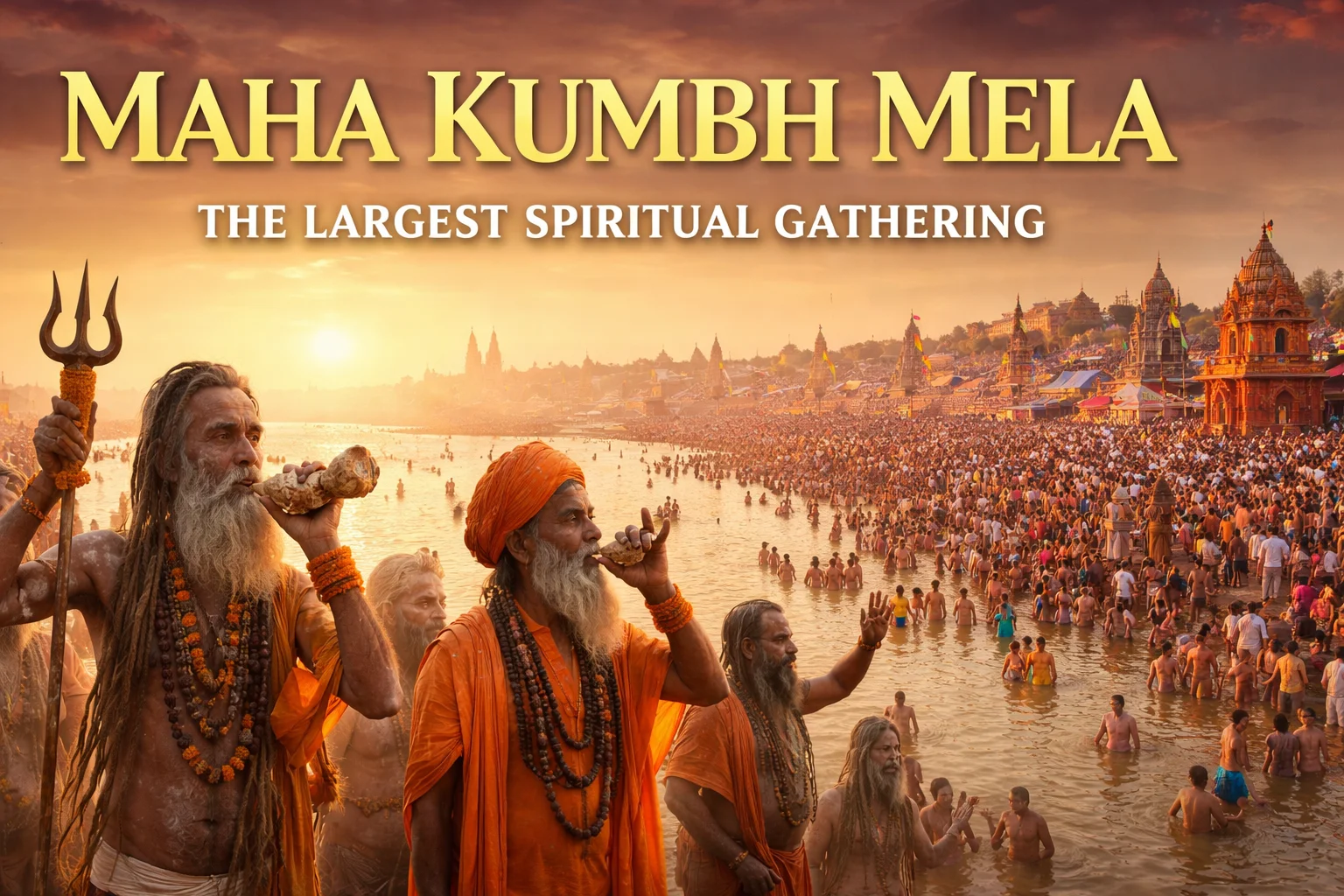
Maha Kumbh Mela is not just a festival; it is an extraordinary confluence of faith, devotion, culture, and human spirit. Recognized as the largest religious gathering in the world, it is celebrated with unmatched grandeur at four sacred rivers in India: Prayagraj (Ganga, Yamuna, and mythical Saraswati), Haridwar (Ganga), Nashik (Godavari), and Ujjain (Shipra). Every 12 years, devotees, saints, and tourists from across the globe converge to participate in this spiritual phenomenon, making it a spectacle of human faith and tradition.
History and Mythological Significance
The origins of Maha Kumbh Mela are deeply rooted in Hindu mythology. According to the legend of Samudra Manthan (the Churning of the Ocean), gods (Devas) and demons (Asuras) fought for a pot (Kumbh) containing amrita, the nectar of immortality. During the struggle, drops of this nectar fell on four locations in India: Prayagraj, Haridwar, Nashik, and Ujjain. These sites are considered exceptionally sacred, and it is believed that bathing in their holy rivers during the Kumbh Mela cleanses one of sins and grants spiritual liberation.
Historically, the festival is documented in texts dating back several centuries. Accounts from travelers, saints, and scriptures describe the confluence of devotees, sadhus, and kings, emphasizing the festival’s religious, cultural, and political importance. It is not just a ritual; it is a living tradition that showcases India’s spiritual heritage and unity in diversity.
When and Where is Maha Kumbh Mela Celebrated?
Maha Kumbh Mela occurs every 12 years at Prayagraj, while other locations—Haridwar, Nashik, and Ujjain—celebrate Kumbh Mela every 12 years on a rotational basis. The exact dates are determined by Hindu astrology, based on the positions of Jupiter, the Sun, and the Moon. The festival lasts for approximately 55 days, attracting millions of devotees.
Key Locations:
- Prayagraj Kumbh Mela (Triveni Sangam)
The most famous Kumbh site where the Ganga, Yamuna, and mythical Saraswati rivers meet. It holds immense spiritual importance and is often regarded as the holiest location for Hindu pilgrims. - Haridwar Kumbh Mela (Ganga River)
Situated in Uttarakhand, Haridwar is known for its ghats, temples, and Ganga Aarti, attracting pilgrims seeking spiritual cleansing. - Nashik Kumbh Mela (Godavari River)
Celebrated in Maharashtra, Nashik’s Kumbh is associated with Lord Rama, who is believed to have visited the region during his exile. - Ujjain Kumbh Mela (Shipra River)
In Madhya Pradesh, Ujjain is famous for its Mahakaleshwar Jyotirlinga temple and spiritual gatherings.
Spiritual Significance
The Maha Kumbh Mela is primarily a spiritual journey, emphasizing purification of the body, mind, and soul. Devotees believe that a holy dip in the river during Kumbh Mela washes away sins and grants Moksha (liberation). The rituals performed include:
- Shahi Snan (Royal Bath): The most awaited ritual where Naga Sadhus—renowned for their austerities—lead the ceremonial bathing.
- Puja and Yagna: Devotees participate in prayers, offerings, and fire rituals seeking divine blessings.
- Meditation and Spiritual Discourses: Saints and spiritual leaders conduct discourses on dharma, morality, and philosophy.
Maha Kumbh Mela is also a melting pot of Hindu sects, including Shaivites, Vaishnavites, and other spiritual communities. It is believed that witnessing and participating in the Kumbh Mela can transform one’s life, encouraging self-realization, compassion, and devotion.
Also Read; Shivratri 2026: Dates, Significance, Puja Vidhi, Muhurat & Complete Guide
Cultural and Social Importance
Beyond spirituality, Maha Kumbh Mela is a grand celebration of Indian culture:
- Unity in Diversity
Devotees from all states, communities, and even foreign countries attend, demonstrating harmony among diverse cultures. - Traditions and Attire
The sadhus and pilgrims don traditional attire, saffron robes, and ash markings, maintaining centuries-old customs. - Music, Art, and Crafts
Folk music, devotional songs, and local handicrafts showcase India’s rich artistic heritage. - Community and Charity
Pilgrims often engage in community kitchens (langars), medical camps, and social service, reinforcing the spirit of compassion.
Key Attractions and Highlights
- Shahi Snan (Royal Bath)
Occurs on specific auspicious days, attracting lakhs of devotees. Naga sadhus, dressed minimally and smeared in ashes, take the first ceremonial dip, followed by other sects. - Sadhus and Akharas
Akharas are groups of ascetics representing various sects. They play a central role in organizing rituals and guiding devotees. - Processions and Festivals
Grand processions with flags, elephants, and horses create a vibrant atmosphere of celebration. - Cultural Programs
Devotional songs, classical dances, and traditional arts provide entertainment and spiritual experience. - Temporary City (Mela Infrastructure)
Maha Kumbh Mela is like a temporary city with tents, food stalls, medical facilities, sanitation services, and security arrangements for millions of visitors.
Travel Guide: Visiting Maha Kumbh Mela
Visiting Maha Kumbh Mela can be a life-changing experience, but careful planning is essential due to the sheer scale of the event.
How to Reach:
- By Air: Nearest airports are Prayagraj Airport (Prayagraj), Jolly Grant Airport (Haridwar), Nashik Airport, and Devi Ahilya Airport (Ujjain).
- By Train: Indian Railways operates special trains during Kumbh Mela, connecting major cities to the festival site.
- By Road: Well-connected highways and public buses are available, but traffic can be heavy during peak days.
Accommodation:
- Tents and Dharamshalas: The temporary city sets up thousands of tents with basic amenities.
- Hotels and Guesthouses: Book in advance in nearby towns to avoid last-minute hassles.
Safety Tips:
- Crowd Management: Follow instructions from authorities; avoid overcrowded ghats.
- Health Precautions: Drink bottled water, maintain hygiene, and carry essential medicines.
- Navigation: Use maps and local guides; mobile connectivity may be limited.
- Cultural Respect: Follow local customs, dress modestly, and respect rituals.
Environmental Initiatives
Given the massive scale, sustainability and cleanliness have become major priorities. Authorities and NGOs implement:
- Waste management and recycling
- Water and sanitation facilities
- Eco-friendly tents and energy solutions
These initiatives help maintain the ecological balance of sacred rivers and surroundings.
Modern Significance and Global Recognition
In contemporary times, Maha Kumbh Mela has gained global attention:
- Recognized by UNESCO as an Intangible Cultural Heritage of Humanity.
- Attracts millions of international tourists, making it a platform for cultural exchange.
- Combines tradition with modern facilities, including medical aid, information centers, and digital maps for visitors.
The festival is not only a spiritual journey but also a demonstration of India’s organizational capability, culture, and heritage.
FAQs About Maha Kumbh Mela
Q1: How often is Maha Kumbh Mela held?
A1: Maha Kumbh Mela is held every 12 years in Prayagraj, with other locations hosting Kumbh Mela at rotational intervals.
Q2: What is the Shahi Snan?
A2: Shahi Snan, or Royal Bath, is the ceremonial dip by Naga Sadhus and other sects on auspicious dates, considered highly spiritual.
Q3: Can foreigners attend Kumbh Mela?
A3: Yes, the festival is open to all. Many tourists visit for cultural exploration and spiritual experience.
Q4: What should I carry when visiting?
A4: Essentials include comfortable clothes, bottled water, sunscreen, medicines, and a guidebook.
Q5: Is Kumbh Mela only religious?
A5: While spiritual, it is also a cultural, social, and educational event, reflecting India’s diversity.
Conclusion
Maha Kumbh Mela is more than just a festival—it is a grand celebration of faith, humanity, and culture. It blends spiritual rituals with cultural vibrancy, offering a rare chance to witness devotion, discipline, and community spirit on an unparalleled scale. Whether you are a pilgrim seeking spiritual purification, a tourist wanting to explore India’s heritage, or a cultural enthusiast, Maha Kumbh Mela promises an unforgettable experience that transcends time and connects humanity with divinity.
Mark your calendar, plan carefully, and witness one of the greatest gatherings on Earth—a festival where faith flows as endlessly as the rivers themselves.