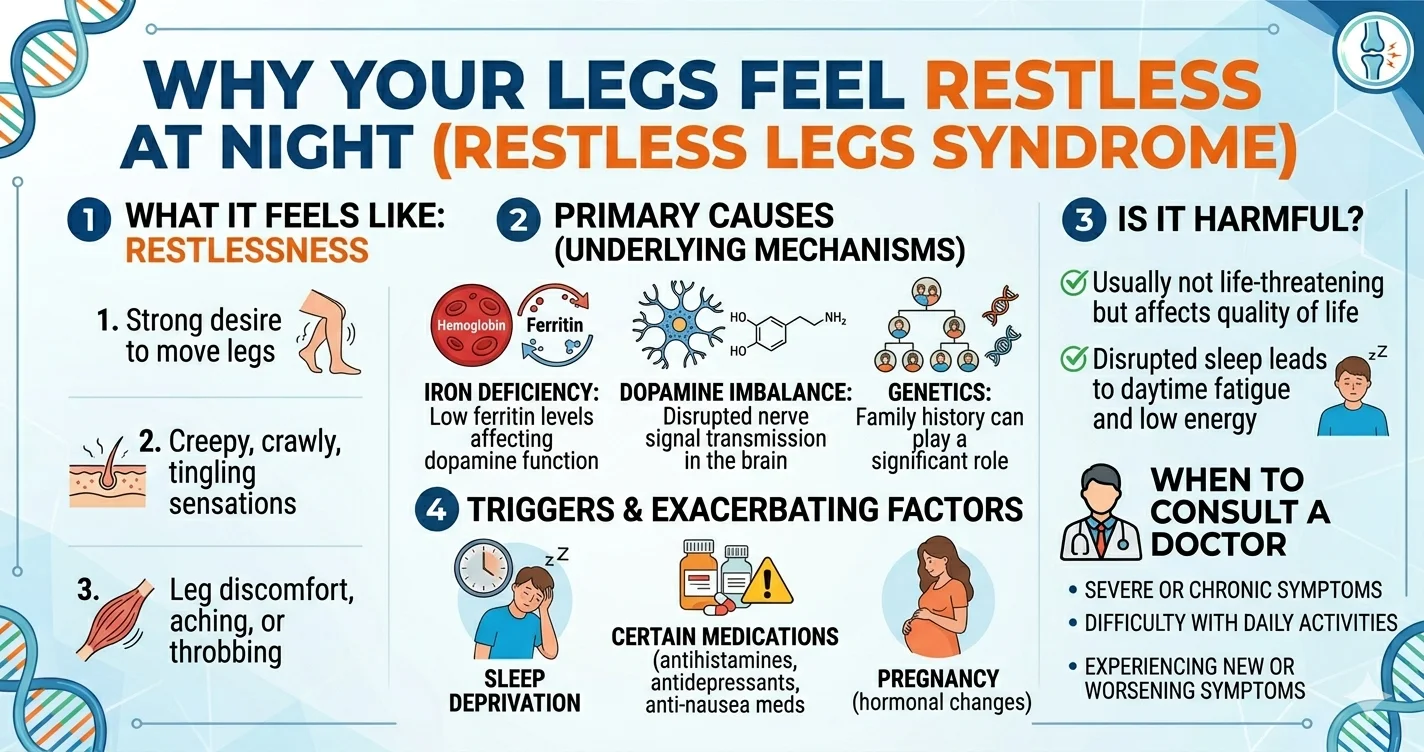
If you often feel an uncontrollable urge to move your legs at night—especially when trying to sleep—you’re not alone. This condition is commonly known as Restless Leg Syndrome (RLS).
It can feel uncomfortable, frustrating, and even sleep-disrupting, but the good news is that in most cases it is manageable with lifestyle changes and proper care.
What Is Restless Leg Syndrome?
Restless Leg Syndrome (RLS) is a neurological condition that causes an irresistible urge to move the legs. It usually happens when you are:
- Sitting for long periods
- Relaxing in bed
- Trying to fall asleep
Moving your legs temporarily relieves the discomfort, but the sensation often returns once you stop.
Common Symptoms of Restless Legs
People describe RLS differently, but common sensations include:
- Crawling or creeping feeling in the legs
- Tingling or “pins and needles”
- Itching deep inside the legs
- Pulling or throbbing sensation
- Urge to move the legs constantly
These symptoms usually become worse at night and improve with movement.
Why It Gets Worse at Night
RLS symptoms tend to intensify in the evening due to natural body rhythms.
Key reasons:
- Lower dopamine activity at night
- Reduced physical movement during rest
- Increased sensitivity to discomfort when lying down
- Brain becomes more aware of sensations in quiet environments
This is why symptoms often disrupt sleep.
Main Causes of Restless Leg Syndrome
The exact cause is not always known, but several factors are linked to RLS:
1. Dopamine Imbalance
Dopamine helps control muscle movement. Any imbalance can trigger abnormal leg sensations.
2. Iron Deficiency
Low iron levels in the brain are strongly associated with RLS.
3. Genetics
RLS often runs in families.
4. Chronic Conditions
Conditions like diabetes, kidney disease, or nerve damage may increase risk.
5. Lifestyle Triggers
- Excess caffeine
- Smoking
- Alcohol consumption
- Lack of exercise
- Poor sleep habits
Hidden Lifestyle Triggers That Make It Worse
Many people unknowingly worsen RLS symptoms through daily habits:
- Drinking tea/coffee late in the day
- Sitting for long hours without movement
- Irregular sleep schedule
- High stress levels
- Excess screen time before bed
These factors increase nervous system stimulation, making legs more restless.
How RLS Affects Sleep
Restless Leg Syndrome can seriously impact sleep quality:
- Difficulty falling asleep
- Frequent night awakenings
- Daytime fatigue
- Reduced focus and productivity
Over time, poor sleep can also affect mood and mental health.
Natural Ways to Reduce Restless Legs at Night
If symptoms are mild, lifestyle changes can help significantly:
1. Stretch Before Bed
Gentle stretching relaxes leg muscles and improves circulation.
2. Reduce Caffeine Intake
Avoid tea, coffee, or energy drinks after late afternoon.
3. Stay Physically Active
Regular walking or exercise reduces nighttime symptoms.
4. Warm or Cold Therapy
- Warm baths relax muscles
- Cold packs reduce tingling sensations
5. Massage Legs
Light massage before sleep can calm nerve activity.
6. Improve Sleep Routine
Go to bed at the same time every night and reduce screen exposure.
Medical Treatment Options (If Needed)
In more severe cases, doctors may suggest:
- Iron supplements (if deficiency is present)
- Dopamine-related medications
- Nerve-calming medicines
- Treatment for underlying conditions
Always consult a healthcare professional before starting medication.
When You Should See a Doctor
You should seek medical advice if:
- Symptoms occur daily
- Sleep is severely affected
- Discomfort is painful or worsening
- You experience numbness or weakness
Early treatment can prevent worsening symptoms.
Final Thoughts
Restless Leg Syndrome is a real and often misunderstood condition. While it can be frustrating, it is usually manageable once the triggers are identified.
In many cases, simple changes like improving sleep habits, reducing caffeine, and staying active can significantly reduce symptoms.
Your body is not “broken”—it’s simply sending signals that your nervous system needs balance and rest.
FAQs
1. Why do my legs feel restless only at night?
Because dopamine levels drop and your body is at rest, making sensations more noticeable.
2. Is Restless Leg Syndrome dangerous?
No, it is not life-threatening, but it can affect sleep quality and daily energy.
3. Can stress cause restless legs?
Yes, stress can worsen or trigger symptoms by affecting the nervous system.
4. Does walking help RLS?
Yes, movement often provides temporary relief from symptoms.
5. Can diet affect restless legs?
Yes, iron deficiency and high caffeine intake can worsen symptoms.
Excessive Sweaty Hands and Feet in Summer: Causes, Treatment & Easy Solutions