Bhutan is a small country tucked between India and China in the eastern Himalayas. It is often called the “Land of the Thunder Dragon” and is famous for its breathtaking mountains, deep green valleys, spiritual monasteries, and peaceful way of life. Unlike many modern nations, Bhutan measures success not by money but by happiness. This idea is known as Gross National Happiness (GNH), and it makes Bhutan truly unique in the world.
For travelers, Bhutan feels like stepping into another time—a place where nature, culture, and spirituality live together in perfect harmony. Snow-capped peaks rise above misty forests, prayer flags flutter in the wind, and ancient monasteries sit on cliffs as if they are floating in the sky. Bhutan is not just a destination; it is an experience that touches the soul.
The Magic of Bhutan’s Mountains
Bhutan is covered by mountains almost everywhere you look. The Himalayas form its northern border, with some peaks rising above 7,000 meters. These mountains are not just beautiful—they are sacred to the Bhutanese people. Many believe that mountain spirits protect their land and bring good fortune.
The air in Bhutan is clean and fresh because the country has strict environmental laws. In fact, Bhutan is one of the few carbon-negative countries in the world, meaning it absorbs more carbon than it produces. Forests cover over 70% of the country, and cutting trees is heavily controlled.
Popular mountain regions include:
- Paro Valley – Famous for its green fields, traditional houses, and the iconic Tiger’s Nest Monastery.
- Thimphu – Bhutan’s capital, surrounded by hills and filled with peaceful monasteries.
- Punakha – Known for its warm climate, rivers, and stunning dzongs (fortresses).
- Bumthang – Considered the spiritual heart of Bhutan, full of ancient temples.
Every journey through Bhutan feels like a moving painting—layers of mountains fading into the horizon, clouds rolling like waves, and sunlight dancing across valleys.
Monasteries – The Heart of Bhutan
Religion plays a central role in Bhutanese life. Most people follow Buddhism, and monasteries are not just religious places but also centers of learning, culture, and community.
1. Tiger’s Nest Monastery (Paro Taktsang)
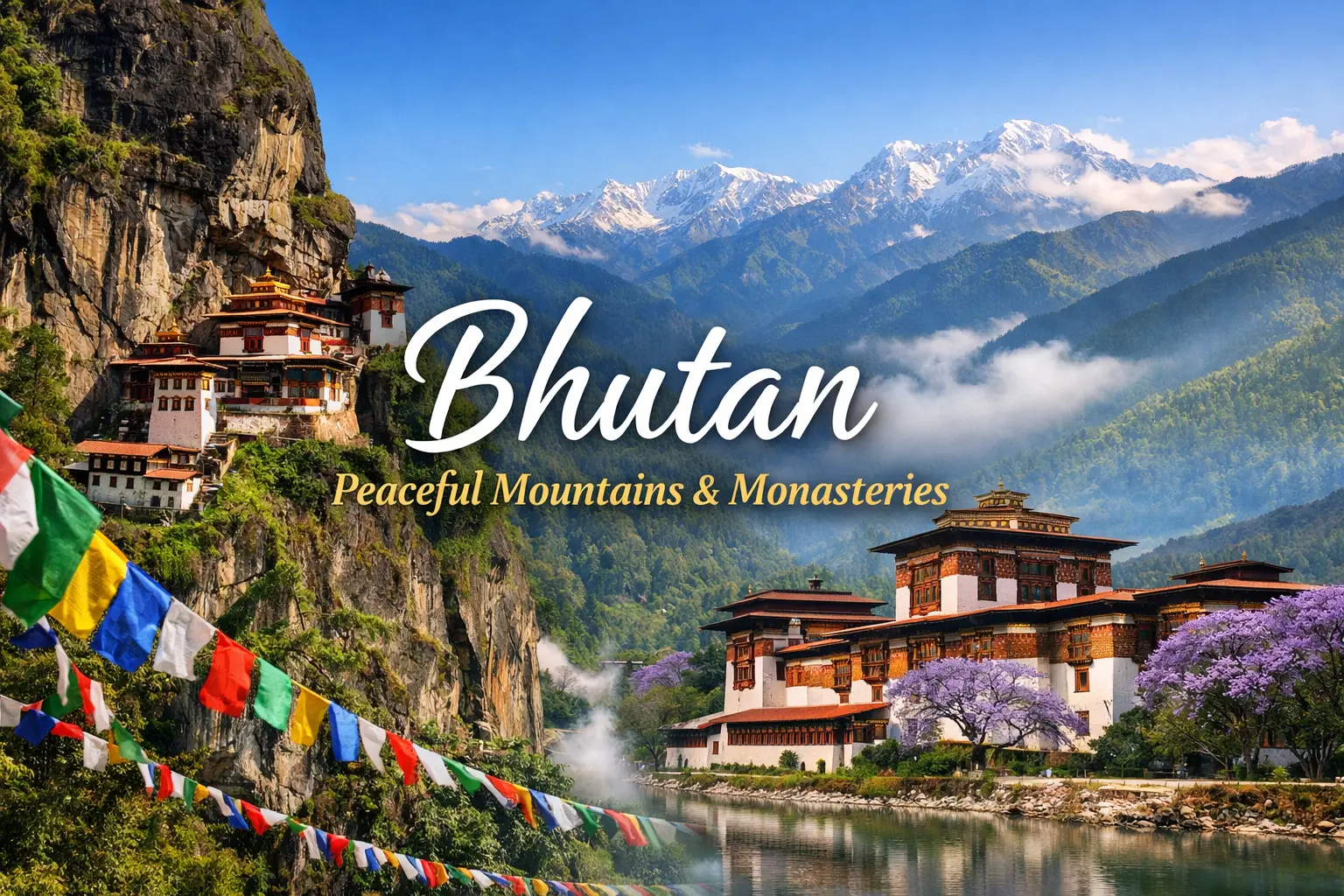
This is Bhutan’s most famous landmark. The monastery clings to a cliff 900 meters above the Paro Valley. According to legend, Guru Padmasambhava (who brought Buddhism to Bhutan) flew here on the back of a tiger and meditated in a cave.
Reaching the monastery requires a hike of about 2–3 hours. The path winds through pine forests with prayer wheels along the way. When you finally see the monastery, it feels like a dream.
2. Punakha Dzong
This grand fortress sits between two rivers—the Pho Chhu (male river) and Mo Chhu (female river). It is one of the most beautiful dzongs in Bhutan and is still used for religious ceremonies.
Inside, colorful murals tell stories of Bhutanese history and Buddhist teachings. During spring, purple jacaranda trees bloom around the dzong, making it even more magical.
3. Tashichho Dzong (Thimphu)
This is the seat of Bhutan’s government and the central monastic body. In the evening, monks gather here for prayers, creating a calm and sacred atmosphere.
4. Jakar Dzong (Bumthang)
Located on a hilltop, this dzong overlooks the valley below. It is one of Bhutan’s oldest fortresses and an important spiritual site.
A Land Where Happiness Comes First
Bhutan does not chase fast development at the cost of culture and nature. Instead, it focuses on well-being, education, health, and environmental protection.
The idea of Gross National Happiness includes:
- Good governance
- Cultural preservation
- Environmental conservation
- Sustainable development
Schools teach both modern subjects and traditional Bhutanese values. People wear national dress—gho for men and kira for women—on formal occasions. Even government workers follow this tradition.
You will rarely see traffic jams, pollution, or crowded cities. Life moves at a slower, more mindful pace.
Bhutanese Culture and Daily Life
Bhutanese people are warm, respectful, and deeply spiritual. Many homes have small prayer rooms where families light butter lamps and offer prayers.
Festivals, called Tshechus, are colorful celebrations featuring mask dances, music, and rituals. The most famous is the Paro Tshechu, where thousands gather in traditional attire.
Food in Bhutan is simple but flavorful. The national dish is Ema Datshi—chili cooked with local cheese. Other common foods include red rice, momos (dumplings), and butter tea.
Nature and Wildlife in Bhutan
Bhutan is a paradise for nature lovers. It is home to rare animals like:
- Snow leopards
- Red pandas
- Golden langurs
- Black-necked cranes
National parks such as Jigme Dorji National Park and Royal Manas National Park protect vast areas of wilderness. Birdwatchers love Bhutan because many Himalayan bird species can be seen here.
Trekking is one of the best ways to explore Bhutan’s natural beauty. Popular routes include:
- Druk Path Trek
- Snowman Trek (one of the hardest in the world)
- Jomolhari Trek
Each trek offers breathtaking views, remote villages, and a deep sense of peace.
Why Bhutan Feels Different from the Rest of the World
Unlike many tourist destinations, Bhutan limits the number of visitors through a regulated tourism policy. This keeps the country clean, safe, and culturally intact.
There are no big billboards, no noisy nightlife, and no mass tourism. Instead, you find silence, spirituality, and simplicity.
Traveling in Bhutan feels like healing. The mountains calm your mind, the monasteries lift your spirit, and the people remind you what truly matters in life.
Best Time to Visit Bhutan
The best months to visit are:
- March to May – Spring season with blooming flowers.
- September to November – Clear skies and perfect views of the Himalayas.
Winter (December to February) is cold but beautiful, while summer (June to August) brings rain and mist.
How to Travel to Bhutan
You must book your trip through a registered Bhutanese tour operator. Direct independent travel is not allowed for most tourists. Flights usually arrive at Paro International Airport, one of the most scenic airports in the world.
Bhutan – A Journey for the Soul
Bhutan is not just about seeing places—it is about feeling peace. Whether you sit in a monastery, walk through pine forests, or watch prayer flags flutter in the wind, Bhutan leaves a deep mark on your heart.
It teaches you to slow down, breathe deeply, and appreciate the simple beauty of life.
If there is one place that truly lives up to the idea of “peaceful mountains and monasteries,” it is Bhutan.
FAQs – Bhutan: Peaceful Mountains & Monasteries
1. Why is Bhutan called the Land of Happiness?
Because Bhutan measures success through Gross National Happiness instead of money.
2. Is Bhutan expensive to visit?
Yes, tourism is regulated and includes a daily fee, which covers guides, hotels, and transport.
3. Can Indians visit Bhutan without a visa?
Yes, Indians can visit with valid ID proof, but permits are still required.
4. What is the most famous monastery in Bhutan?
Tiger’s Nest Monastery in Paro.
5. Is Bhutan safe for tourists?
Yes, it is one of the safest countries in the world.
6. What is Bhutan’s national dish?
Ema Datshi (chili with cheese).
7. When is the best time to visit Bhutan?
March–May and September–November.
8. Do people speak English in Bhutan?
Yes, English is widely spoken, especially in cities.